Embroidery Floss Organizer Laser Cut
As an embroidery designer who has digitized thousands of machine embroidery designs for small businesses, I approach every new digital embroidery file with a practical eye. I want to know not just how it looks on screen, but how it performs on fabric, how it scales, how it reads at small sizes, and whether it adds real value to a brand's merchandise lineup. The Embroidery Floss Organizer Laser Cut recently crossed my desk, and I want to share my professional assessment for small business owners, embroidery shops, apparel decorators, handmade brands, Etsy sellers, and anyone producing custom apparel or branded merchandise.
First Impression and Visual Personality
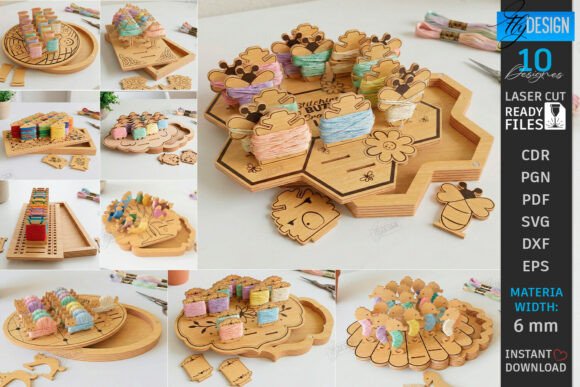
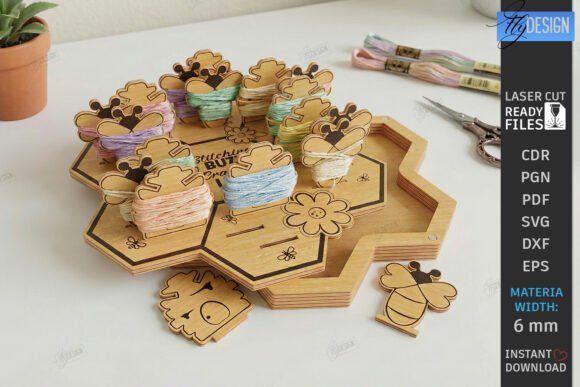
The Embroidery Floss Organizer Laser Cut immediately communicates a handmade, premium aesthetic. The name suggests organization, craft, and thoughtful design. When I first opened this embroidery file, I saw a structure that balances decorative detail with functional intent. The removable bobbin holders and decorative storage base give it a layered, dimensional feel that translates well into embroidered form. This is not a generic clip-art shape. It has character, and that matters when you are building brand identity through small business merch.
For a small business, this design reads as warm, artisanal, and trustworthy. It is not cold or industrial. It has the look of something made by hand, which is exactly the message many boutique brands, cafés, florists, and creative studios want to send. If you are looking for a design that says "we care about craftsmanship," this digital embroidery file delivers that message clearly. The overall personality sits somewhere between rustic charm and modern elegance, making it versatile enough for both a neighborhood bakery and a high-end handmade shop.
Because it is categorized under Organizers, the design naturally evokes a sense of order and intentionality. That subconscious association works in your favor when customers see it on a tote bag or apron. They perceive the brand as organized and detail-oriented. For a product designer or craft business owner, that is a powerful asset.
Real Business Use Cases
This design is versatile enough to appear on multiple merchandise formats. Let me walk through the most practical applications I see for the Embroidery Floss Organizer Laser Cut in a real small business setting.
Staff Uniforms and Aprons
The most natural home for this design is on staff uniforms and aprons. A café, bakery, or boutique could place it on the chest of an apron or the left chest of a work shirt. The decorative base element gives it enough visual weight to stand alone as a logo accent, yet it is not so large that it overwhelms the garment. Apron embroidery with this design feels intentional and premium. For a florist or plant shop, the bobbin holder motif even echoes the shape of a small pot or vessel, adding a subtle thematic layer.
Caps and Tote Bags
Cap embroidery requires careful scaling, and this design can work on a cap front if you test the size beforehand. The bobbin holder motif creates a unique talking point. Customers notice embroidered details that feel intentional. A tote bag design featuring this embroidery file becomes a walking advertisement for the brand's attention to detail. I would place it centered on the bag or offset near the bottom corner for a more modern look. On a sturdy canvas tote, the design stands out beautifully.
Product Packaging and Gift Items
For product packaging accents, this design can be used as a small embroidered patch sewn onto the corner of a canvas pouch, a fabric gift bag, or even a reusable produce bag. It adds a handmade finishing touch that elevates the unboxing experience. Customers who buy handmade products expect that level of care. This design helps deliver it.
Staff Name Badge Alternative
I also see strong potential for this design as a staff name badge alternative. Instead of a standard rectangular patch, the bobbin holder shape provides a more interesting silhouette that still reads clearly. It is professional without being boring, and it reinforces the brand's handmade identity every time a staff member wears it.
Event Merch and Limited Runs
Event merchandise, pop-up shop exclusives, and limited-run collaborations are another natural fit. Because the design has a craft-oriented personality, it aligns well with handmade markets, artisan fairs, and local business events. A small run of caps or tote bags with this design creates a cohesive, memorable product line.
Where to Use This Design Carefully
No design is perfect for every surface, and the Embroidery Floss Organizer Laser Cut has a few areas where I advise caution.
Small Patch Sizes
Small patch sizes can be tricky. If you plan to use this design on a cap front or a small sleeve accent, you need to test it at reduced scale. The decorative storage base has details that may become muddy if stitched too small. I recommend testing the design at the exact size you intend to use before committing to production. If the bobbin holders or base elements become indistinct at that size, consider using the design only at larger sizes or simplifying the stitch path.
Curved Surfaces
Curved surfaces, such as cap crowns or curved tote bag panels, require attention to hooping and stabilizer choice. The design has a structured shape, and any distortion during hooping will be visible in the final stitch-out. Use a firm hooping technique and consider a heavier stabilizer to keep the design crisp.
High Stitch Density
Stitch density is something I always check. The description mentions removable bobbin holders and a decorative base, which suggests multiple layers of stitching. If the density is too high, the fabric may pucker, especially on lightweight apparel. I recommend a medium-weight cutaway stabilizer for most applications. If you are working with stretchy knit fabrics, increase to a heavy-weight stabilizer or use a stabilizer sandwich technique.
Dark Uniforms
Dark uniforms present a visibility challenge. If your staff wears dark shirts or aprons, you need to ensure the thread colors you choose stand out against the fabric. A light metallic or bright solid thread can help maintain readability. Test your color choices on the actual fabric before production.
Frequent Washing
For items that need frequent washing, such as barista aprons or kitchen uniforms, the design must be tested for durability. High stitch density can sometimes cause edges to fray over time. A proper digitizing file should include pull compensation and edge paths that resist wear. Test a sample through several wash cycles before committing to a full run.
Brand Identity and Customer Impact
The Embroidery Floss Organizer Laser Cut contributes directly to brand identity in a positive way. It reinforces a message of handmade quality, thoughtful design, and artisanal care. For a small business, these attributes build customer trust and recognition.
When a customer sees an embroidered patch or logo accent that has genuine design character, they perceive the business as more professional and more invested in quality. This design does not look like a stock clip-art logo. It looks like something a designer crafted with intention. That perception elevates the entire custom apparel line.
Visual consistency across merchandise is easier to achieve when the design file is well-structured. Because this design has clear, definable shapes, it can be reproduced reliably across different garment types and colors. That consistency strengthens brand recognition over time. A customer who sees the design on an apron at the shop and later on a tote bag at a market will immediately connect the two items to the same brand.
Product value also benefits. A tote bag or apron with a thoughtful embroidered detail feels more expensive than one without. Customers are more likely to keep and use an item that shows design effort. That longevity translates into repeated brand exposure every time the item is carried or worn.
For handmade brands and Etsy sellers, this design fits naturally into a product line. It communicates the same values that drive customers to choose handmade over mass-produced. It is a design asset that reinforces the seller's positioning as a craft-focused business.
Practical Designer Notes for Production
Before you send this design to production, I recommend the following practical steps based on my experience with similar machine embroidery designs.
- Test it in black and white first. Stitch out the design using a single dark thread color on a light fabric. This test reveals any spacing issues, density problems, or design flaws without wasting multiple thread colors.
- Check if it works at small patch size. If you plan to use this design as a 2-inch embroidered patch, make sure the details remain readable. If the bobbin holders or base elements become indistinct at that size, consider simplifying the design or using it only at larger sizes.
- Review thread color contrast carefully. Choose thread colors that separate the bobbin holders from the base. Without enough contrast, the design may read as a single shape rather than a layered composition.
- Inspect spacing between elements. The removable bobbin holders should have enough clearance from the base so that they do not stitch together. If the spacing is too tight, the design may look like a solid mass.
- Confirm hoop size before loading the file. Make sure the design dimensions fit within your available hoop sizes. Nothing wastes time like a design that does not fit the hoop. Check the product details for hoop size recommendations.
- Test on real fabric. Fabric texture affects how the design looks. A smooth cotton apron will stitch differently than a textured twill cap. Run a test stitch-out on the exact fabric you plan to use for your finished product.
- Use proper stabilizer. For most applications, a medium-weight cutaway stabilizer will provide the support this design needs. For stretchy or lightweight fabrics, consider a heavier stabilizer or a combination of stabilizer layers.
- Create a printable mockup for client approval. Before stitching a full production run, show the client a digital mockup or a single stitch-out sample. This step prevents costly mistakes and builds client confidence.
- Compare it beside other design assets. If you already have a logo or other embroidered elements, check that this design visually complements them. Consistency across all design assets strengthens the overall brand.
- Confirm commercial licensing before business use. Always verify that your embroidery file includes commercial use rights. The design description does not specify license terms, so I recommend contacting the seller or checking the product listing for commercial embroidery permissions before producing any branded merchandise.
Final Thoughts
The Embroidery Floss Organizer Laser Cut is a welcome addition to any small business embroidery library. It offers a handmade, premium look that works well on aprons, caps, tote bags, and staff uniforms. With proper scaling, stabilizer choice, and thread color selection, it can become a reliable design asset for branded merchandise. I recommend this design to any small business owner, embroidery shop, or apparel decorator looking for a distinctive, artisanal motif that builds brand identity and customer trust. Test it carefully, scale it thoughtfully, and it will serve your merchandise well. For those working with Laser Cutting projects, the structural clarity of this design also makes it a strong candidate for physical production, but as an embroidery file, it holds its own beautifully on fabric.