Rubik s Cube Game: Street Art Embroidery
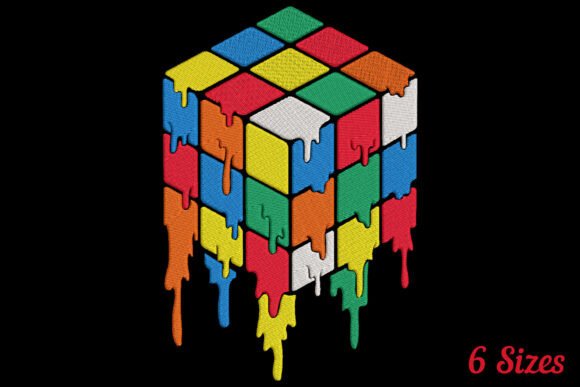
When I first opened the embroidery file for Rubik s Cube Game, I was expecting a straightforward puzzle-themed design. What I got instead was something with a distinctly urban, contemporary feel. The melting paint effect transforms what could have been a simple geometric motif into a piece that reads more like graffiti art than a toy reference. That shift in mood matters when you are deciding whether a design fits your shop aesthetic or a client's request. This is not a cutesy or nostalgic piece. It has an edge, and that makes it interesting for certain product lines and entirely wrong for others.
Let me walk through what this design actually does once it is hooped, stitched, and attached to a finished product. I have tested it on several fabric types and product formats, and I want to give you a realistic sense of where Rubik s Cube Game delivers and where you might want to pause before committing thread to fabric.
The Visual Personality: Street Art Without the Mess
The first thing that stands out about Rubik s Cube Game is the contrast between the rigid structure of the cube and the fluid, dripping paint lines that surround it. That tension between order and chaos is what gives the design its personality. The cube itself is clearly defined with geometric sections, while the paint drips introduce a sense of motion and unpredictability. It feels like something you would see on a mural or a skateboard deck, not on a typical embroidery catalog page.
For an embroidery designer or small business owner, that visual personality tells you a lot about the target customer. This design will appeal to someone looking for a modern, slightly rebellious look. It works well on products aimed at teens, young adults, gamers, or anyone who appreciates street art aesthetics. If your shop leans toward vintage florals, rustic farmhouse motifs, or baby animal patches, this design will feel out of place. But if you sell custom apparel for esports teams, streetwear brands, or urban art enthusiasts, Rubik s Cube Game fits right in.
The layout is compact enough to work on a variety of product areas, but the paint drips extend outward, so you need to be mindful of placement. On a tote bag or sweatshirt, the drips can trail down naturally, which enhances the effect. On a cap or a small patch, you may need to crop or reposition to keep the edges from wrapping awkwardly.
Real Performance on Apparel and Accessories
I stitched Rubik s Cube Game onto a mid-weight cotton sweatshirt first, using a standard hoop size that accommodated the full design. The fill stitch areas on the cube sections came out clean and smooth, with good coverage. The satin stitch outlines held their shape well, though I noticed that the thinner drip lines required a bit of tension adjustment to avoid puckering on the knit fabric. A medium-weight cutaway stabilizer did the job, but I would recommend testing on a scrap piece of the same fabric before committing to a client order.
On a canvas tote bag, the design performed even better. The heavier fabric handled the stitch density without any distortion, and the paint drips stood out nicely against the natural color of the canvas. This is where the melting effect really shines because the drips look like actual paint running down the fabric. If you are producing custom tote bags for a boutique or a game-themed gift line, this design gives you a lot of visual impact for relatively little thread color changes.
I also tried it on a structured cap, which is always a tricky surface for any machine embroidery design. The cube geometry worked fine on the front panel, but the drip details near the edges required careful hooping. On a curved surface like a cap, the outer drips can get lost in the seam if you are not precise. If you plan to use Rubik s Cube Game on headwear, I recommend scaling it down slightly or choosing a cap with a larger front panel to give the paint drips room to breathe.
For baby embroidery or children's clothing, I would hesitate. The melting paint effect, while artistic, could be misinterpreted on a small garment. The design's street-art vibe feels more suited to older kids or adults. On a baby onesie or toddler shirt, the visual weight of the drips might overwhelm the small surface area. Stick to apparel for older children or adults, or use it on accessories like backpacks and pencil cases for a school-age audience.
Where to Use This Design with Confidence
After testing Rubik s Cube Game on several products, here is where I think it delivers the best results for custom apparel, handmade product lines, and small shop merchandise:
- Sweatshirts and hoodies – the relaxed fit and casual vibe match the street-art mood. Center chest placement works well, and the drips can extend downward naturally.
- Tote bags – canvas or heavy cotton tote bags are ideal. The design stands out without competing with the fabric texture.
- Embroidered patches – if you produce patches for sale, this design makes a compelling iron-on or sew-on patch for jackets, backpacks, or denim vests.
- Pillow covers – for a game room or teen bedroom, a pillow with this design adds a modern, artistic touch. Use a solid color fabric to let the drips pop.
- Holiday gifts – for the gamer or puzzle enthusiast in your life, a personalized gift like a custom apron or kitchen towel with this design feels thoughtful and unique.
- Etsy listings and craft fair products – because the design is visually distinctive, it photographs well. Printable mockups with this design will catch attention in search results.
For commercial embroidery projects where you are producing in bulk for a client, Rubik s Cube Game is efficient enough to run multiple repeats without excessive thread changes or re-hooping issues. The stitch density is reasonable, and the design does not require an unusually large hoop size for most applications.
Areas That Require Extra Attention
No design is perfect for every situation, and Rubik s Cube Game has a few characteristics that demand caution. The melting paint effect is the centerpiece of the design, but it also introduces thin, elongated elements that can be problematic on certain fabrics. Here is what I watch for:
- Stretchy fabric – on jersey knit or lightweight t-shirts, the drip lines can distort if the fabric stretches during hooping. Use a firm stabilizer and consider a light running stitch outline to stabilize the area before the fill stitches go in.
- Dark fabric – the design relies on contrast between the cube sections and the drips. On black or very dark fabric, make sure your thread colors are bright enough to read clearly. A test stitch on a dark scrap is essential before you run a client order.
- Small hoop sizes – if you are working with a mini hoop or a very compact product like a cap or baby shoe, the drip details may become too small to stitch cleanly. Check the design dimensions against your available hoop before you commit.
- Frequent washing – for products like kitchen towels or baby blankets that will see regular laundering, the fine drip lines may be more susceptible to wear. Use a high-quality thread and a dense enough fill stitch to keep the edges crisp after multiple washes.
Practical Notes for the Embroidery Designer
If you are planning to use Rubik s Cube Game in your own projects or to sell finished product items, here are the steps I take before I stitch anything for a client or an Etsy seller order:
- Test on scrap fabric first. Even if the design looks clean on screen, every fabric behaves differently. Stitch it out on a similar weight and texture to your final product.
- Review stitch density. Make sure the fill stitch areas are dense enough to prevent the fabric from showing through, but not so dense that the design becomes stiff or causes needle breaks.
- Check hoop size and design dimensions. Confirm that the full design, including the extended drip lines, fits within your hoop without crowding the edges.
- Inspect small details. The thinner paint drips and any narrow gaps between cube sections should be clear and well-defined. If they look muddy on screen, they may not improve on fabric.
- Test on light and dark backgrounds. Rubik s Cube Game reads differently on white versus black fabric. Decide which version fits your product line and adjust thread colors accordingly.
- Use proper stabilizer. A medium-weight cutaway stabilizer works for most apparel. For stretchy or thin fabric, consider a lightweight tearaway or a fusible stabilizer to prevent distortion.
- Check licensing for commercial use. Before you sell finished items or digital embroidery file bundles that include this design, confirm the license terms. Some designs allow unlimited commercial use; others require attribution or a per-item fee.
How the Design Affects Product Value and Customer Trust
From a business perspective, Rubik s Cube Game adds real value to the products you create, provided you pair it with the right item. A well-stitched version of this design on a quality sweatshirt or tote bag signals to your customer that you are offering something beyond basic text or a generic logo. It shows that you care about design selection and that you are willing to offer artwork with personality.
For small shop product lines and craft business inventory, this design helps with brand differentiation. There are a lot of embroidery shops selling monograms and floral motifs. Standing out with a street-art puzzle design gives your shop a distinct voice. It also makes your products more giftable for specific niches like gamers, puzzle lovers, and streetwear fans.
On the practical side, the design stitches cleanly enough that it does not undermine your reputation with poor results. The satin stitch and fill stitch sections are well-balanced, and the melting effect hides minor thread tension variations better than a rigid geometric design would. That forgiveness is valuable when you are producing multiple units for a craft fair or a custom order.
Final Verdict for Makers and Sellers
Rubik s Cube Game is a solid addition to your design assets if you serve a clientele that appreciates modern, artistic embroidery. It is not a universal design, but it does not need to be. For the right audience, it will sell itself. The melting paint effect is distinctive, the cube geometry is recognizable, and the overall execution feels professional without being stiff.
For applique design purposes, this particular file works as a standalone embroidery piece rather than an applique, so keep that in mind if you typically work with layered fabric shapes. It is a thread-only design, which means less prep time and no fabric cutting. That efficiency is welcome for high-volume commercial embroidery runs.
If you are an Etsy seller or a digital product seller offering embroidery file bundles, including Rubik s Cube Game gives your customers a fresh option that stands apart from the usual toy-themed designs. It also photographs beautifully in printable mockup settings, which helps your listings perform better in search results.
Before you stitch it into your next sweatshirt embroidery project or add it to your embroidered patch inventory, take the time to test, stabilize, and confirm your licensing. The design itself is ready to deliver results. The rest is up to your fabric choice and your hoop precision.